Wildlife Ponds — Wildlife Pond Creation & Habitat Ponds in East Sussex & Kent
Wildlife ponds are one of the most valuable habitats you can create on your land. A well-designed wildlife pond supports amphibians (frogs, toads, newts), aquatic invertebrates, dragonflies and damselflies, birds, bats, and a rich community of aquatic plants. As wildlife pond creation contractors based in Battle, East Sussex, we design and build wildlife ponds for farms, estates, gardens, and conservation projects across Kent and East Sussex.
Unlike ornamental or fishing ponds, a wildlife pond is designed specifically for biodiversity. It has shallow margins for amphibians to access and leave the water, varied depths for different species, a natural profile with gentle slopes, and native planting that supports the full aquatic food chain. We build wildlife ponds that become thriving ecosystems within months of completion.
Why Wildlife Ponds Matter
Wildlife ponds are critical for biodiversity. Across Kent and East Sussex, natural ponds have been lost to agricultural intensification, drainage, and development — and the wildlife that depends on them has declined. Frogs, toads, and newts have suffered catastrophic declines in recent decades, and aquatic invertebrates and plants are under pressure from pollution and habitat loss.
Creating new wildlife ponds is one of the most effective ways to reverse these declines. A new wildlife pond can support breeding populations of amphibians within its first year, attract dragonflies and damselflies, and provide a drinking and bathing spot for birds and bats. A network of wildlife ponds across a farm or estate can dramatically increase the local biodiversity.
Wildlife ponds also qualify for Biodiversity Net Gain and environmental schemes, providing ecological value and potential grant funding. For farmers and landowners, a wildlife pond can contribute to Countryside Stewardship and other schemes, providing both wildlife and financial benefit.
Our Wildlife Pond Creation Services
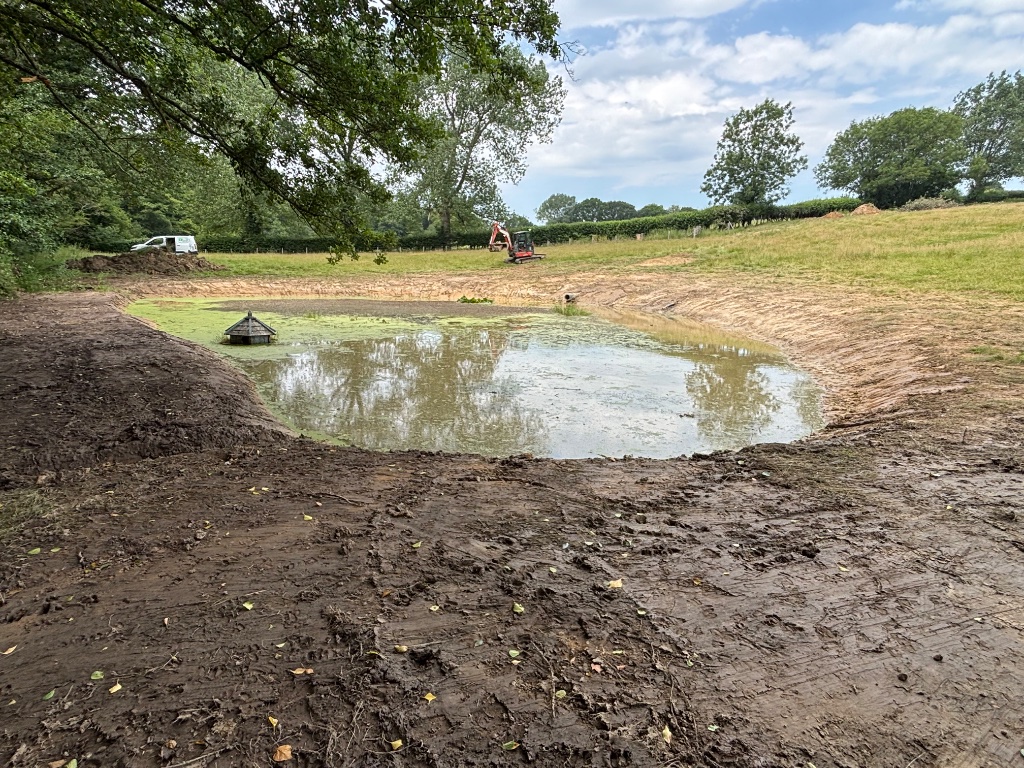
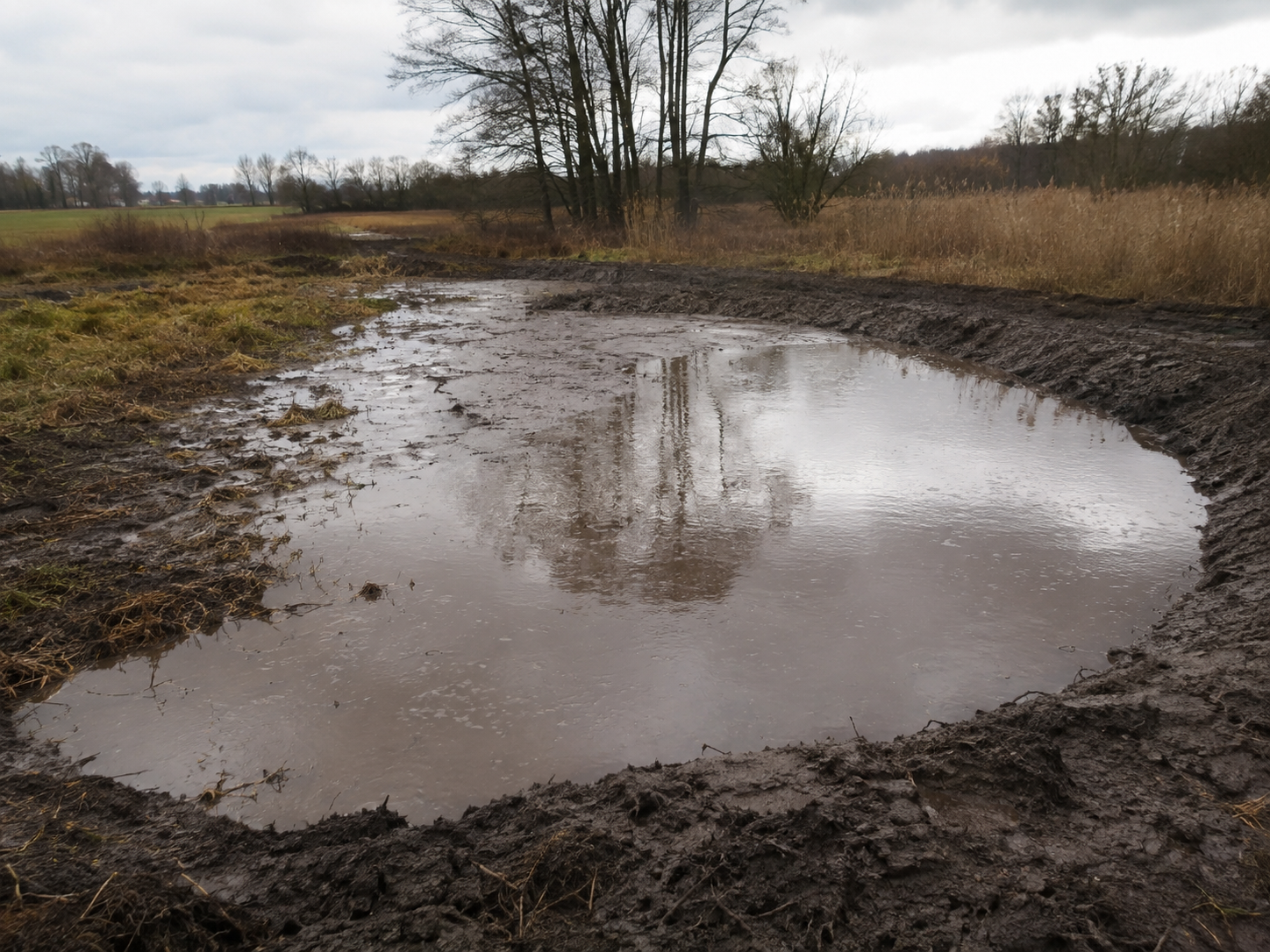
We design and build wildlife ponds of all sizes across Kent and East Sussex. The design focuses on biodiversity: shallow, gently sloping margins (the most valuable part of a wildlife pond), varying depths from 20cm at the edge to 80–120cm in the centre, an irregular shape with bays and promontories, and a sunny, sheltered location away from overhanging trees.
We excavate the pond with our own excavators, shaping the banks to a gentle profile. We install the lining — natural clay puddling where the soil allows, or butyl or HDPE liner where it doesn't — and install a shallow beach or ramp to allow amphibians and small mammals to access and leave the water safely. We avoid fish, which would predate the amphibians and invertebrates that the pond is designed to support.
We carry out native marginal and aquatic planting — using local-origin native species that support the aquatic food chain. This includes emergent plants (reeds, rushes, sedges), floating-leaved plants (water lilies), and submerged plants (hornwort, water starwort). All work is carried out with our own plant. We're based in Battle, East Sussex and cover all of Kent and East Sussex. Call us on 07376 622637 for a free wildlife pond creation quote.
Services That Solve This Problem
Related Problems We Solve
Frequently Asked Questions
What is a wildlife pond?
A wildlife pond is a pond designed specifically to support biodiversity. It has shallow margins for amphibians, varying depths, native planting, no fish, and a natural profile. Wildlife ponds support frogs, toads, newts, dragonflies, aquatic invertebrates, and birds. We build wildlife ponds across Kent and East Sussex.
How big should a wildlife pond be?
Wildlife ponds can be any size, but a minimum of about 2m x 2m is recommended to support a stable ecosystem. Larger ponds support more wildlife and are more resilient. The key design features — shallow margins, varying depths, native planting — are the same regardless of size.
Do wildlife ponds need a liner?
Wildlife ponds need to hold water, so either a natural clay seal (if the soil has sufficient clay content) or a synthetic liner (butyl or HDPE) is required. We assess the soil during the site survey and recommend the best approach. Natural clay is preferable where possible as it provides a more natural substrate.
Can a wildlife pond qualify for grants?
Yes. Wildlife ponds can contribute to Biodiversity Net Gain and environmental schemes like Countryside Stewardship. We design and build wildlife ponds that meet the requirements of these schemes, and we can advise on the specification needed to qualify.
Need Help With This Problem?
Call us for a free quote. Based in Battle, East Sussex — covering Kent and East Sussex. We respond within 24 hours.