Farm Drain Contractor — Agricultural Field Drainage in East Sussex & Kent
If your farm land is waterlogged, your crops are suffering, or your pasture is too wet for livestock, you need a farm drain contractor who understands agricultural land drainage. We install, upgrade, and repair farm drainage systems across Kent and East Sussex, helping farmers and smallholders get water off their land and keep it productive.
As agricultural drainage contractors based in Battle, East Sussex, we've been working on farm drainage across the Weald and South Downs for over 10 years. We understand the clay soils, the high water tables, and the drainage challenges specific to farming in the South East — and we have the excavators and drainage equipment to install effective systems on land of any size.
Common Farm Drainage Problems
Waterlogged fields are the most visible sign of a drainage problem. After rain, water sits on the surface for days, crops turn yellow from waterlogging, and pasture becomes a quagmire. On heavy Wealden clay, this is common — the soil holds water rather than letting it drain through, and without a proper drainage system, the land stays wet for weeks after rainfall.
Old drainage systems are a frequent issue. Many farms in Kent and East Sussex have land drainage systems that were installed decades ago — clay tile drains, perforated pipes, or mole drains — that have collapsed, silted up, or been damaged by roots. These systems no longer function, and the land they were meant to drain has reverted to waterlogged ground.
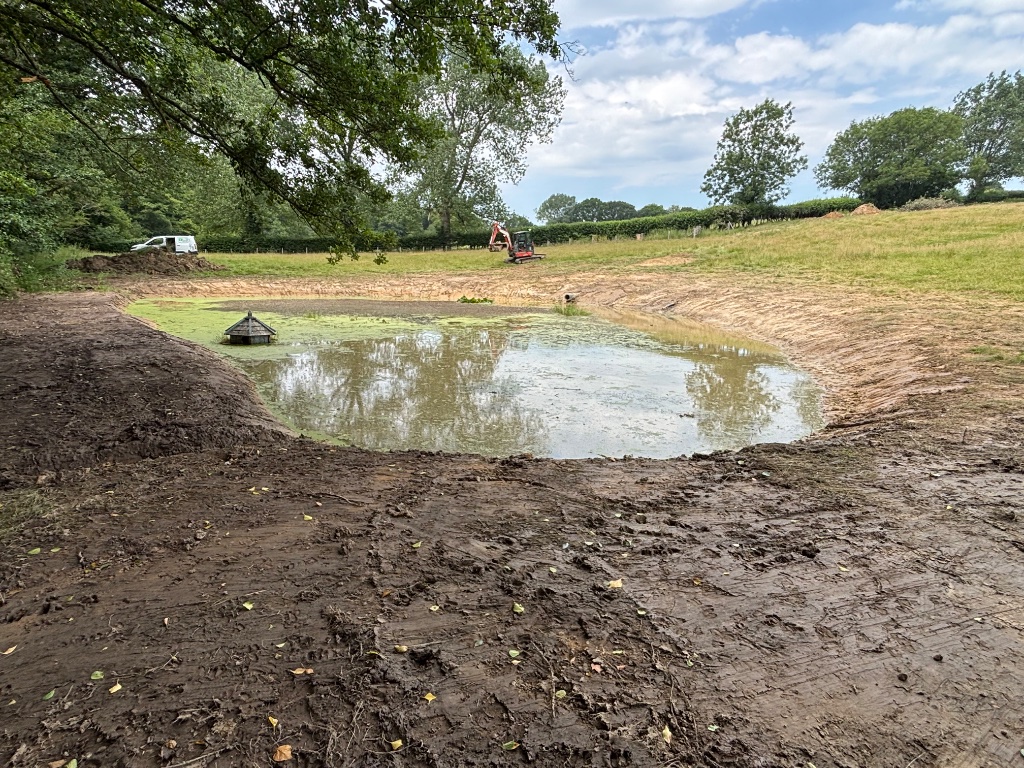
Blocked ditches and outfalls are another common problem. Even a good field drainage system won't work if the ditches and watercourses it discharges into are blocked. Silt, vegetation, and debris build up over time, and water backs up into the field drains, rendering them useless. Regular ditch clearance is essential for any farm drainage system.
Our Farm Drainage Services
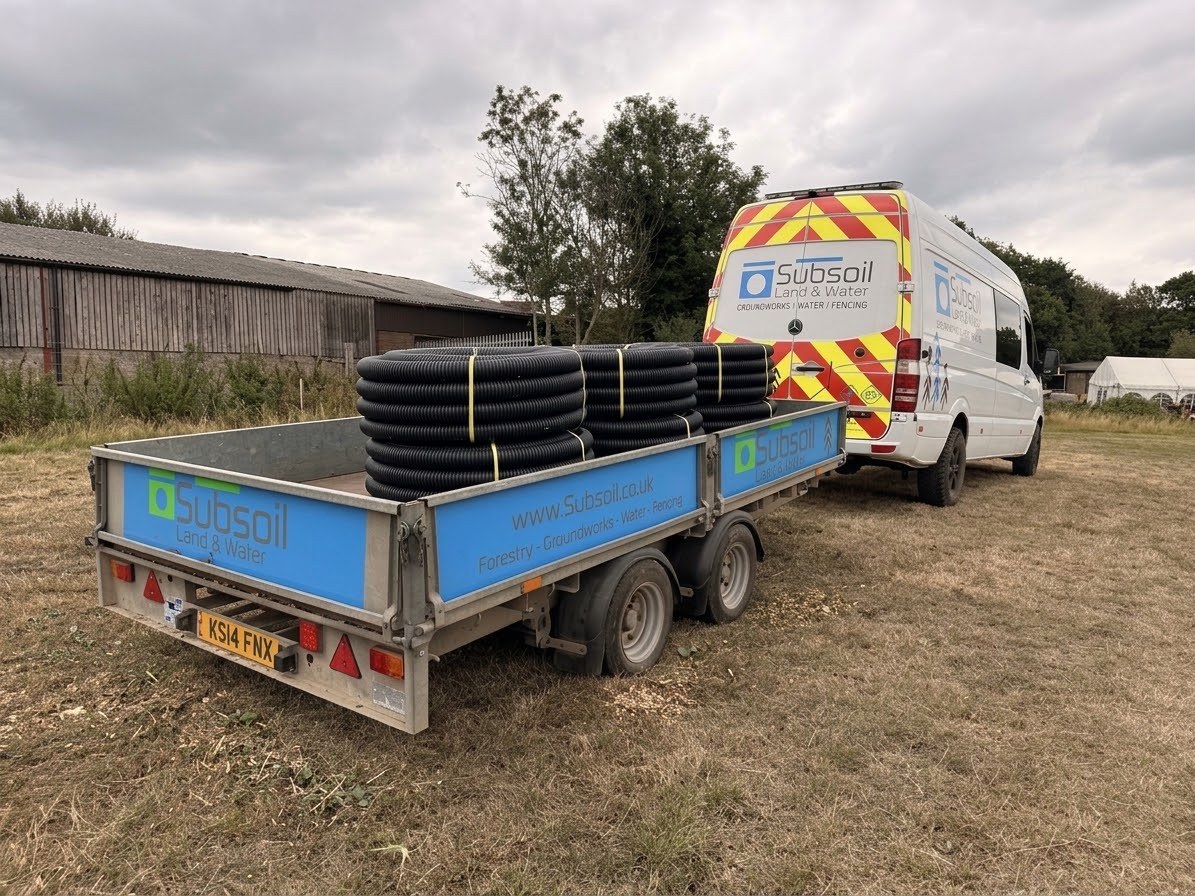
We install new farm drainage systems and upgrade existing ones. For new systems, we design a drainage layout suited to your land — typically a herringbone or grid pattern of perforated pipe drains, laid at the correct depth and gradient to collect water and carry it to a ditch or watercourse. We install drains with our own excavators, using quality perforated pipes wrapped in geotextile membrane and gravel backfill.
For existing systems, we can diagnose and repair failures — excavating collapsed sections, replacing silted-up pipes, and clearing blocked outfalls. We also carry out mole drainage on suitable clay soils — a cost-effective technique that creates unlined channels through the clay to speed up drainage. Mole drainage typically lasts 3–5 years and is an affordable way to improve drainage on heavy clay land.
All farm drainage work includes ditch clearance and maintenance to ensure the system can discharge freely. We're licensed waste carriers, so we handle all arisings in-house. And because we own all our own plant, we can mobilise quickly and keep costs down — no waiting for hired machinery, no subcontractor delays.
Services That Solve This Problem
Related Problems We Solve
Frequently Asked Questions
How much does farm drainage installation cost?
The cost depends on the area to be drained, the depth and spacing of drains, the soil conditions, and the outfall arrangements. Mole drainage is the most cost-effective option on suitable clay soils; full perforated pipe drainage systems cost more but last decades. We provide free quotes after a site visit — call us on 07376 622637.
How deep should farm drains be?
Field drainage pipes are typically installed at 600–900mm depth, depending on the soil type, the crop, and the gradient. On clay soils, drains are laid closer together and shallower; on lighter soils, they can be deeper and further apart. We design the drainage layout to suit your specific land and usage.
What is mole drainage and how long does it last?
Mole drainage is a technique where a mole plough is pulled through the clay soil to create an unlined channel that collects and carries water. It's a cost-effective way to improve drainage on heavy clay land. Mole drains typically last 3–5 years before they need re-moling. They work best on clay soils with a stable subsoil.
Can you repair an old farm drainage system?
Yes. We can diagnose and repair existing drainage systems — excavating collapsed sections, replacing silted-up pipes, clearing blocked outfalls, and clearing ditches. In some cases, a full replacement is more cost-effective than repeated repairs. We'll assess your system and recommend the best approach.
Need Help With This Problem?
Call us for a free quote. Based in Battle, East Sussex — covering Kent and East Sussex. We respond within 24 hours.