Dredging Contractors — Specialist Water Management, Pond, Lake & Ditch Dredging in East Sussex & Kent
If you're looking for dredging contractors in East Sussex or Kent, we carry out pond dredging, lake dredging, ditch dredging and silt removal across the South East. As specialist dredging and desilting contractors based in Battle, East Sussex, we use our own excavators and operated plant to remove accumulated silt and sediment from ponds, lakes, ditches and watercourses — restoring depth, capacity and water quality without the need for subcontractors or hired plant.
Dredging is the most effective way to bring a silted-up pond, lake or ditch back to life. Over time, soil, leaves and organic matter wash in and settle on the bottom, gradually filling the waterbody until it becomes shallow, stagnant and choked with vegetation. Our dredging service removes that built-up silt and restores the open water — whether it's a farm pond near Battle, an estate lake in Cranbrook, a drainage ditch in Hailsham or a commercial waterbody in Eastbourne.
Why Dredging Matters
Siltation is the single biggest issue affecting ponds, lakes and ditches in the South East. Across the Weald of Kent and the South Downs of East Sussex, runoff from surrounding farmland, woodland and exposed ground carries soil and organic matter into waterbodies, where it settles on the bed and builds up year after year. A pond that was 1.5 metres deep can become just 30 cm deep after a decade of siltation — too shallow to support fish or aquatic life, prone to algae blooms, and liable to dry out in summer or overflow in winter.
In ditches and watercourses, silt build-up restricts flow and causes water to back up onto surrounding land. Fields, tracks and even properties can flood because a silted ditch can no longer carry the water away. Regular dredging and ditch clearance keeps these drainage networks functioning and prevents the flooding that results from neglected watercourses.
For estates, farms, landowners and commercial property owners across Kent and East Sussex, dredging is essential maintenance. It restores water capacity, improves water quality, prevents flooding, and protects the ecological value of ponds, lakes and wetlands. Left too long, the cost and complexity of restoration only increases — so it pays to dredge before a waterbody becomes completely silted up.
Our Dredging Services
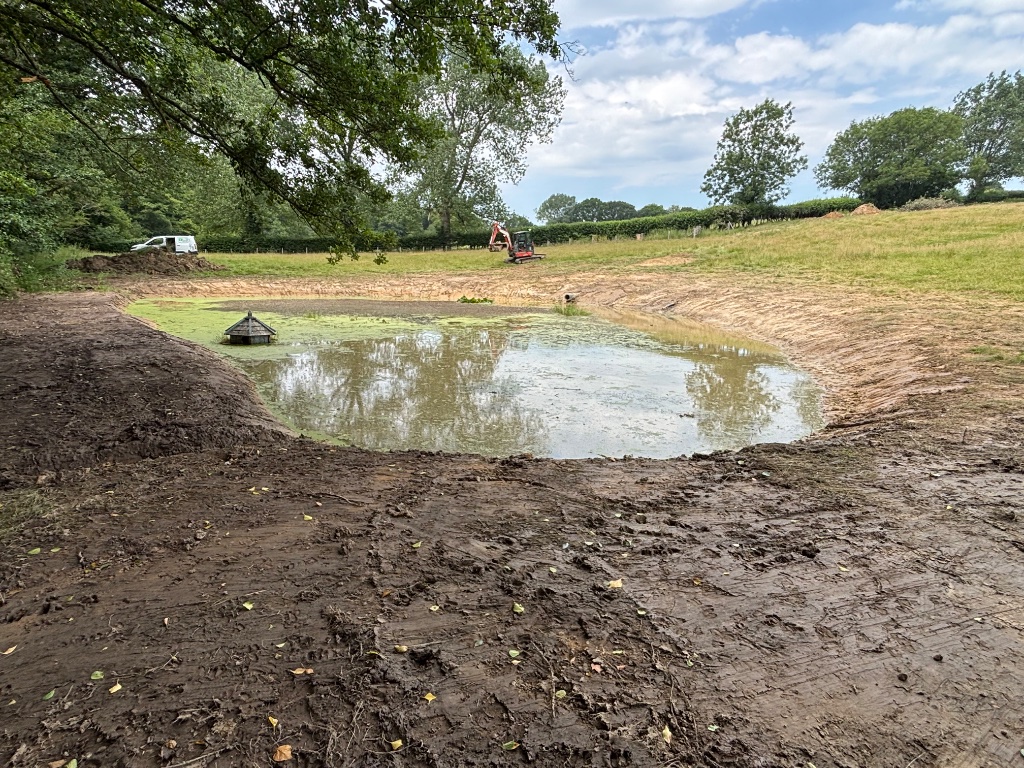
We dredge ponds, lakes, ditches and watercourses of all sizes using our own tracked excavators — from mini excavators for small garden ponds and restricted-access ditches to 8-tonne machines for larger lake dredging and estate watercourses. We work from the bank with long-reach excavators, or from within the waterbody where ground conditions allow, excavating the accumulated silt from the bed and loading it into dumpers or grab lorries.
Our pond dredging and lake dredging service restores depth and capacity to silted-up waterbodies. We drain down where needed, excavate the silt, reshape the banks and bed, repair any leaks, and restore the overflow and inlet so the pond or lake refills cleanly. The dredged silt can be spread on adjacent land as a soil improver where appropriate, or removed from site — we're licensed waste carriers, so all arisings are handled in-house.
Our ditch dredging service clears silted and overgrown drainage ditches and watercourses, reshaping the banks to restore the correct profile and gradient so water flows freely again. We also carry out dredging as part of wider wetland restoration and pond restoration projects across Battle, Hastings, Bexhill, Eastbourne, Cranbrook, Hailsham, Heathfield and the wider Kent and East Sussex area. Because we own all our own plant and operate it ourselves, we deliver the full dredging service — excavation, silt removal, bank restoration and muck-away — as one package.
Services That Solve This Problem
Related Problems We Solve
Frequently Asked Questions
What is the difference between dredging and desilting?
Dredging and desilting are closely related — both involve removing accumulated silt and sediment from a waterbody. Desilting usually refers to restoring depth to a pond or lake, while dredging is the broader term that also covers clearing ditches, watercourses and larger lakes. We carry out both pond desilting and full dredging of lakes, ditches and watercourses across Kent and East Sussex.
How much does pond or lake dredging cost?
The cost depends on the size of the waterbody, the volume of silt to be removed, access for machinery, and whether the silt can be spread on adjacent land or needs to be taken off site. We provide free quotes after a site assessment — we'll estimate the silt volume and give you a clear price. Call us on 07376 622637.
How do you dredge a pond or lake?
We dredge using our own excavators, working from the bank with long-reach machines or from within the waterbody where ground conditions allow. We excavate the silt from the bed, load it into dumpers or grab lorries, and either remove it from site or spread it on adjacent land. We then reshape the banks and bed, repair any leaks, and restore the overflow and inlet.
How often should a pond or lake be dredged?
Most ponds need dredging every 5 to 15 years and lakes every 15 to 30 years, depending on the rate of siltation, surrounding land use and inflow. Waterbodies on agricultural land or with significant inflow silt up faster. Regular maintenance — vegetation management and overflow clearance — extends the time between dredging. We can assess your pond or lake and advise.
What areas do you cover for dredging?
We're based in Battle, East Sussex and cover Kent and East Sussex — including Battle, Hastings, Bexhill, Eastbourne, Tunbridge Wells, Cranbrook, Hawkhurst, Tenterden, Hailsham, Heathfield, Rye, Lewes, Robertsbridge and all surrounding towns and villages.
Need Help With This Problem?
Call us for a free quote. Based in Battle, East Sussex — covering Kent and East Sussex. We respond within 24 hours.