Standing Water in Field? Drainage Solutions for Farmers & Landowners
Standing water in a field is a sign that the ground can't absorb or drain away rainfall fast enough. Across Kent and East Sussex, this is one of the most common drainage problems we encounter — particularly on the heavy Wealden clays and compacted soils of the South East. If your field has standing water after rain, the problem won't fix itself, and it will get worse over time.
As land drainage contractors based in Battle, East Sussex, we fix fields with standing water by installing or upgrading drainage systems that move water off the land efficiently. From perforated pipe field drainage to French drains, ditch clearance and soakaways, we have the plant and expertise to solve standing water problems on fields of any size across Kent and East Sussex.
What Causes Standing Water in Fields?
Standing water occurs when rainfall can't drain through the soil or run off the surface fast enough. On heavy clay soils, the water sits on top because the clay particles are too tightly packed to let it through. On compacted ground — where livestock, machinery or horses have pressed the soil into a hard pan — water can't penetrate at all and pools on the surface.
Blocked or inadequate drainage is another major cause. If your field has old drainage pipes that have collapsed, silted up or been damaged by roots, the system can't carry water away. If the ditches and watercourses around the field are blocked, the water has nowhere to go even if the drains are working. And if the field has never had a drainage system installed, the water simply has no path off the land.
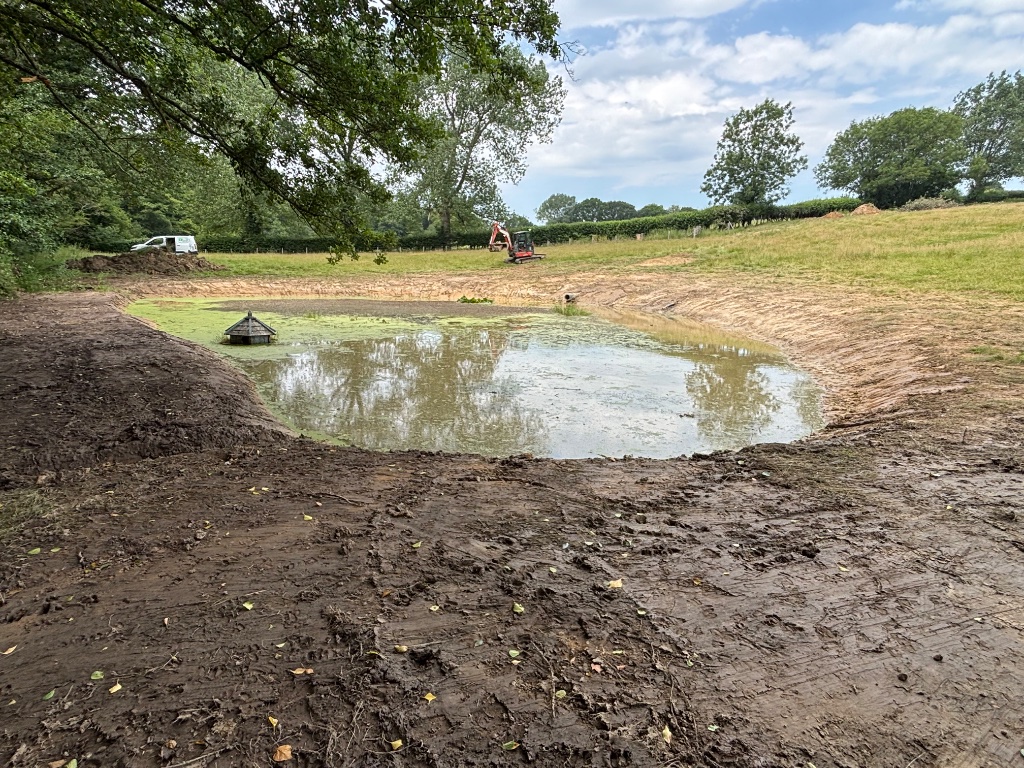
The result is visible: puddles, standing water, boggy patches, and ground that's too wet to use. Left untreated, standing water causes soil compaction to worsen, kills grass and crops, damages pasture, and makes the land unusable for weeks or months at a time.
How We Fix Standing Water in Fields
We assess the field's slope, soil type, existing drainage and outfall options to understand why water is standing and where it needs to go. Then we design and install a drainage system that moves water off the land efficiently — typically a combination of perforated pipe land drainage, French drains, and ditch clearance.
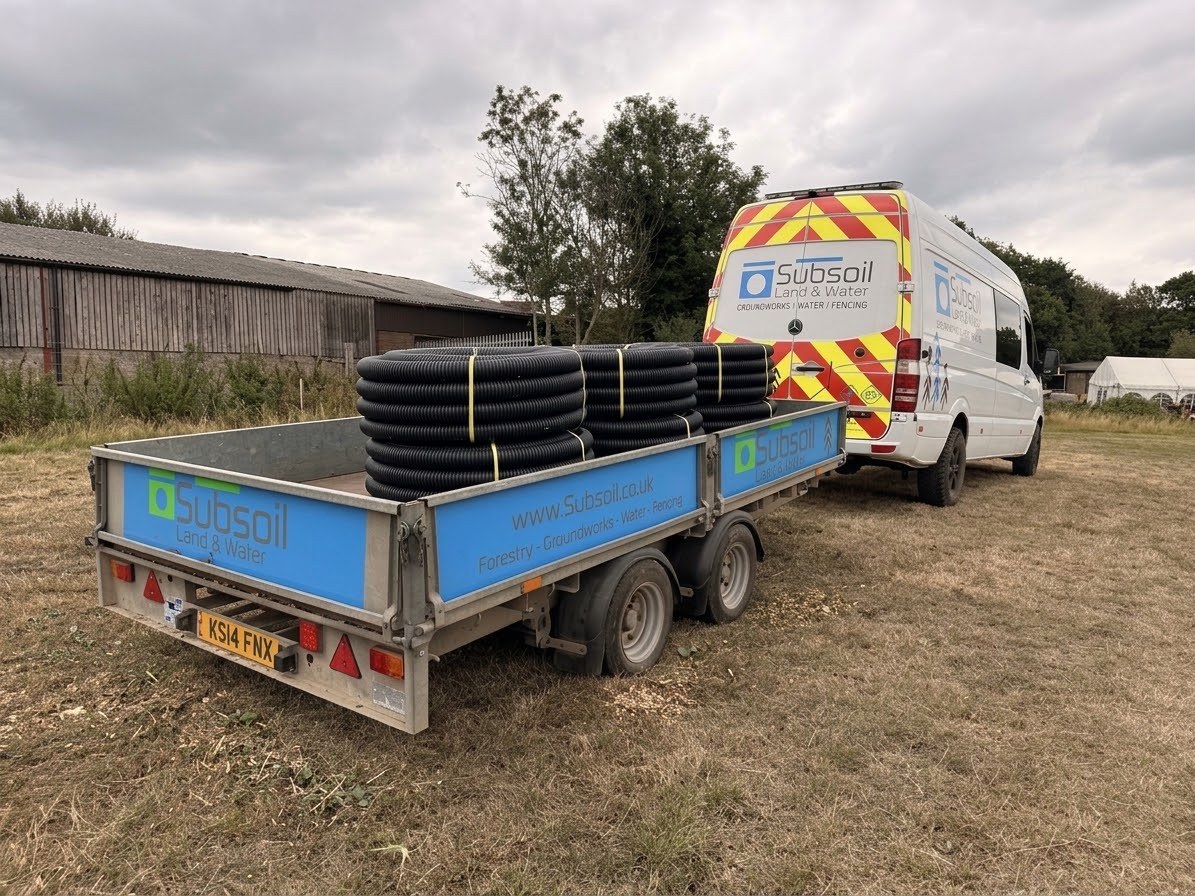
Perforated pipe field drainage is installed in a herringbone or grid pattern to collect water from across the field and carry it to a ditch, watercourse or soakaway. On heavy clay, we space the drains closer together and use clean gravel backfill to ensure water can reach the pipes. French drains are installed along boundaries and at low points where groundwater collects.
Ditch clearance is often the first step — if the ditches around the field are blocked, no drainage system will work. We clear and reshape ditches, restore outfalls, and ensure water can leave the field freely. All work is carried out with our own excavators and drainage equipment, with the full process handled in-house from excavation through to pipe installation, backfill and reinstatement.
Services That Solve This Problem
Related Problems We Solve
Frequently Asked Questions
Why is there standing water in my field?
Standing water in a field is caused by heavy clay soil that won't drain, compacted ground that water can't penetrate, blocked or collapsed drainage pipes, or blocked ditches that prevent water leaving the field. A proper land drainage system — perforated pipes, French drains, and clear ditches — moves water off the land.
How do I get rid of standing water in my field?
We assess the field's soil, slope and drainage, then install a drainage system suited to the ground. This typically involves perforated pipe land drainage in a herringbone or grid pattern, French drains at low points, and ditch clearance to restore outfall. We use our own excavators for the full installation.
Will a French drain stop standing water?
A French drain can stop standing water when installed at the correct depth with proper gravel surround and a clean outfall. French drains are most effective along field boundaries and at the base of slopes where groundwater collects. For larger areas, perforated pipe field drainage is usually needed as well.
How much does it cost to drain a field with standing water?
The cost depends on the size of the area, the soil type, the depth and spacing of drains required, and the outfall arrangements. We provide free, no-obligation quotes after a site visit. Call us on 07376 622637 to arrange a quote.
Need Help With This Problem?
Call us for a free quote. Based in Battle, East Sussex — covering Kent and East Sussex. We respond within 24 hours.