Silted Pond Restoration — Specialist Water Management, Bringing Neglected Ponds Back to Life & Wildlife Area Creation in Kent & East Sussex
Over time, every pond and lake naturally silts up. Soil, leaves and organic matter wash in and settle on the bottom, gradually reducing the depth and capacity of the waterbody. A pond that was once deep and clear becomes shallow, stagnant and overgrown. As pond restoration contractors based in Battle, East Sussex, we desilt and restore silted-up ponds across Kent and East Sussex, bringing neglected waterbodies back to life.
Whether you have a small garden pond that's become a boggy puddle, a farm pond that's silted up and overgrown, or a large estate lake that's lost its depth and water quality, we have the excavators and expertise to restore it. We remove accumulated silt, reshape the banks, and return the pond to its original depth and capacity.
What Happens When a Pond Silts Up
Siltation is a natural process. Soil erodes from the surrounding land and washes into the pond, leaves and vegetation fall in and decompose, and organic matter builds up on the bottom. Over years and decades, the silt layer grows deeper, reducing the water depth and volume. A pond that was originally 1.5 metres deep may become just 30 cm deep — too shallow to support healthy aquatic life.
As the pond becomes shallower, the water quality deteriorates. Shallow water warms faster, encouraging algae blooms and blanket weed. The reduced volume means less oxygen and poorer water quality, which can lead to fish deaths and stagnant, smelly water. The pond becomes an eyesore rather than an asset.
Vegetation takes over the shallow margins, with reeds, rushes and trees colonising the silted areas. The pond becomes smaller, shallower and more overgrown year by year. Eventually, without intervention, the pond will succeed to wetland and then dry land. Restoration — desilting, reshaping and clearing — is the only way to reverse this process and return the pond to a healthy, deep waterbody.
Our Silted Pond Restoration Process
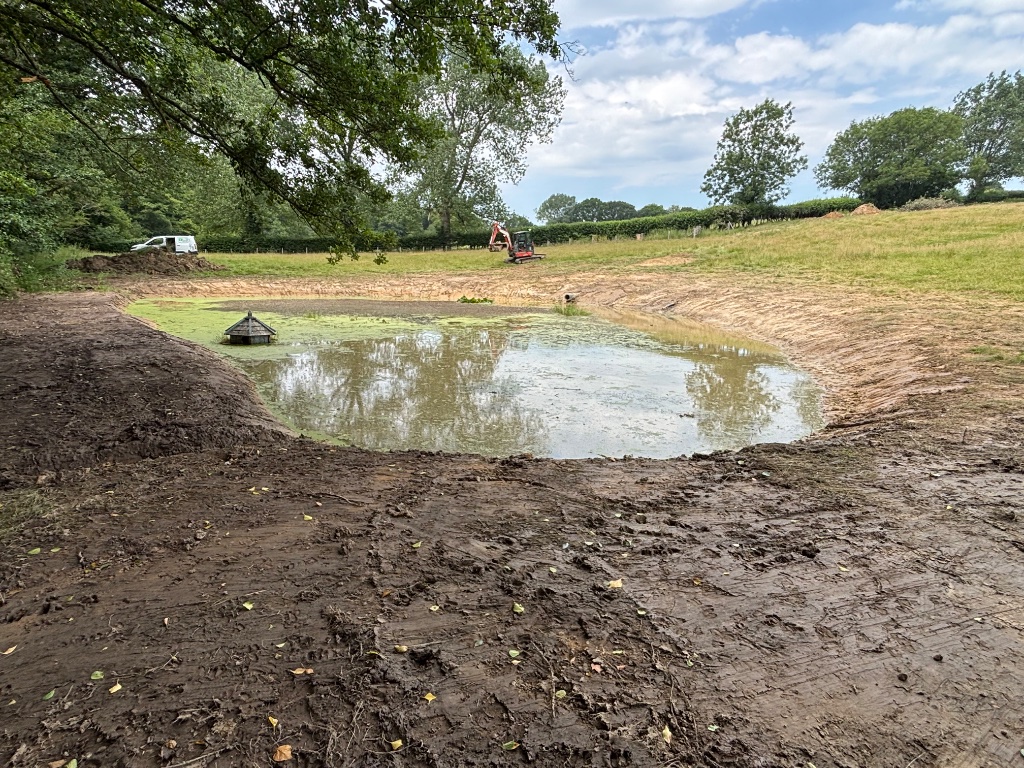
We start by assessing the pond — its current depth, silt volume, access for machinery, and the outfall and overflow arrangements. We then plan the restoration, which typically involves draining the pond (if it isn't already dry), removing the accumulated silt with our excavators, and reshaping the banks and bed to the original or improved profile.
The silt is excavated from the pond bed and loaded into dumpers or grab lorries. Where appropriate, the silt can be spread on adjacent land as a soil improver — it's often rich in organic matter. If the silt is contaminated or can't be spread on site, we remove it to a licensed facility. We handle all aspects of the silt removal, from excavation through to disposal or spreading.
Once the silt is removed, we reshape the banks, repair any leaks in the lining, restore the overflow and inlet, and clear vegetation. The pond is then refilled — either naturally from groundwater and rainfall, or by pumping if a faster refill is needed. The result is a deep, clean, healthy pond with restored capacity, good water quality, and a long life ahead of it. We also provide ongoing maintenance to prevent rapid re-siltation.
Services That Solve This Problem
Related Problems We Solve
Frequently Asked Questions
How much does pond desilting cost?
The cost depends on the size of the pond, the volume of silt to be removed, access for machinery, and whether the silt needs to be taken off site or can be spread on adjacent land. We provide free quotes after a site visit — we'll assess the pond, estimate the silt volume, and give you a clear price.
How do you desilt a pond?
We drain the pond if needed, then excavate the accumulated silt from the bed using our excavators. The silt is loaded into dumpers or grab lorries and either spread on adjacent land or removed from site. We then reshape the banks, repair any leaks, restore the overflow, and refill the pond.
Can silt be spread on land?
Yes, pond silt is often rich in organic matter and can be spread on adjacent land as a soil improver, subject to any environmental regulations. This is usually the cheapest disposal option. If the silt is contaminated or can't be spread on site, we remove it to a licensed facility.
How long does pond restoration take?
The time depends on the size of the pond, the volume of silt, and the access. A small garden pond can be restored in a day or two, while a large estate lake may take a week or more. We give you a clear timescale as part of our quote.
Need Help With This Problem?
Call us for a free quote. Based in Battle, East Sussex — covering Kent and East Sussex. We respond within 24 hours.